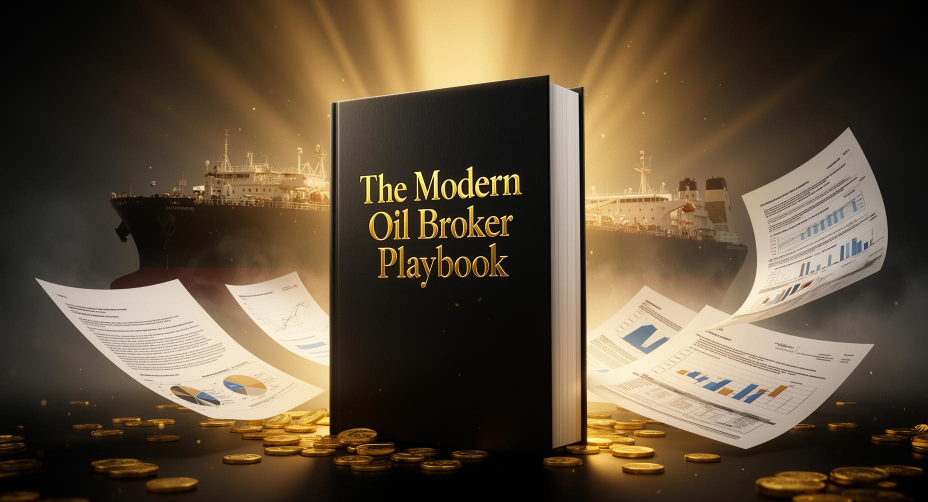
The Modern Oil Broker Playbook
$997.00 Original price was: $997.00.$35.00Current price is: $35.00.
- 24/7 Contact Support & Telegram - Ecomkevin_1
- You Can Request Any Courses
- Original Courses HD Qualite and links updated
Guaranteed Safe Checkout


Description
Introduction
The oil industry has transformed dramatically over the past two decades. What once operated through private calls, handshake deals, and closed-door negotiations has evolved into a data-driven, compliance-heavy, and globally connected marketplace. Today’s broker must understand pricing models, logistics chains, contract structures, digital communication, and geopolitical risk — all at once.
The Modern Oil Broker Playbook is not about outdated tactics. It is a comprehensive framework for operating in today’s high-speed energy markets with professionalism, precision, and credibility.
Whether you’re entering the oil brokerage world or upgrading your approach, this guide will walk you through structure, systems, risk management, and deal execution at a professional level.
1. Understanding the Oil Brokerage Role
An oil broker acts as an intermediary between buyers and sellers of petroleum products. These products may include:
-
Crude Oil
-
EN590 (Diesel)
-
Jet Fuel (Jet A1)
-
LNG
-
LPG
-
Fuel Oil
Your role is not just “connecting two parties.” It involves:
-
Verifying mandates
-
Structuring contracts
-
Managing documentation
-
Handling pricing benchmarks
-
Ensuring transaction security
-
Coordinating logistics
In modern markets, reputation is currency. One failed verification or weak document structure can permanently damage credibility.
2. Market Knowledge: The Foundation of Authority
No broker can survive without strong market knowledge. Oil is priced based on global benchmarks such as:
-
Brent Crude
-
WTI (West Texas Intermediate)
-
Platts pricing reports
Understanding these benchmarks allows you to interpret offers correctly.
For example:
If a seller offers “Brent – $3 per barrel,” you must know:
-
What is today’s Brent price?
-
Is the discount realistic?
-
Does it align with market liquidity?
The modern broker does not guess — they calculate.
You must monitor:
-
Geopolitical tensions
-
OPEC decisions
-
Shipping disruptions
-
Sanctions
-
Seasonal demand cycles
Oil is not just a commodity. It is political, financial, and strategic.
3. Building a Verified Network
One of the biggest mistakes beginners make is collecting random contacts. In reality, success depends on a verified network.
Your network should include:
-
Legitimate refineries
-
Direct mandates
-
Verified buyers
-
Shipping companies
-
Tank storage operators
-
Trade finance institutions
Always request:
-
Company registration documents
-
Proof of product (POP)
-
Past performance records
-
Bank comfort letters (where appropriate)
Never forward unverified offers. In oil brokerage, forwarding fake documents is career suicide.
Professional brokers operate with a compliance mindset. Due diligence is not optional — it is mandatory.
4. The Deal Structure: Step-by-Step
A professional oil transaction follows a structured pathway:
1. ICPO (Irrevocable Corporate Purchase Order)
The buyer expresses formal intent.
2. FCO (Full Corporate Offer)
Seller provides pricing and terms.
3. SPA (Sales and Purchase Agreement)
Contract is drafted and negotiated.
4. Proof of Product
Verification documents such as:
-
SGS reports
-
Tank storage receipts
-
Allocation letters
5. Payment Instrument
Common instruments include:
-
LC (Letter of Credit)
-
SBLC
-
MT103
-
DLC
6. Shipment & Inspection
Independent inspection confirms quantity and quality.
7. Commission Disbursement
Brokers are paid via IMFPA (Irrevocable Master Fee Protection Agreement).
Understanding this sequence separates professionals from amateurs.
5. Risk Management in Modern Brokerage
The oil business carries significant risks:
-
Counterparty fraud
-
Fake POP documents
-
Payment default
-
Sanctions violations
-
Shipment delays
-
Price volatility
Modern brokers protect themselves through:
Legal Structure
Operate under a registered company.
Escrow Arrangements
Use secure banking systems.
Sanctions Screening
Verify compliance with international regulations.
Documentation Control
Never release sensitive documents without proper NDA.
Risk control builds longevity.
6. Digital Branding & Authority
Unlike previous generations, today’s broker must have a digital presence.
Your authority increases when you have:
-
Professional LinkedIn profile
-
Industry articles
-
Verified website
-
Corporate email domain
-
Clear company presentation
Digital silence creates doubt.
When counterparties search your name, they must find credibility — not confusion.
The modern oil broker operates like a corporate entity, not a WhatsApp trader.
7. Negotiation Mastery
Oil deals are high-stakes negotiations. Small changes in pricing can represent millions of dollars.
Successful negotiation requires:
-
Understanding margin structures
-
Knowing real market spreads
-
Controlling emotional reactions
-
Maintaining confidentiality
-
Structuring win-win terms
Never push unrealistic discounts. If Brent is $80 and someone offers $15 below market, it is almost certainly fake.
Professionals value sustainability over quick commissions.
8. Logistics & Shipping Intelligence
Oil transactions are incomplete without logistical clarity.
Key elements include:
-
CIF vs FOB terms
-
Incoterms 2020 rules
-
Vessel chartering
-
Tank storage verification
-
Port documentation
-
Bills of Lading
A broker must understand the physical flow:
Refinery → Storage Tank → Vessel Loading → Port Discharge → Buyer Inspection
If you cannot explain this chain clearly, you are not yet operating at a professional level.
9. Trade Finance Knowledge
Large oil deals require financial instruments. Understanding trade finance gives you leverage.
Common instruments:
-
Letter of Credit (LC)
-
Standby Letter of Credit (SBLC)
-
Documentary Credit
-
Bank Guarantees
You must understand:
-
Bank rating requirements
-
Confirmation process
-
SWIFT message types
-
UCP 600 rules
Weak financial knowledge destroys deals faster than bad negotiation.
10. Commission Protection Strategy
Brokers often lose money because commission protection is poorly structured.
Always:
-
Sign IMFPA
-
Include NCNDA (Non-Circumvention, Non-Disclosure Agreement)
-
Ensure commissions are reflected in SPA
-
Use bank-to-bank commission disbursement
Verbal agreements do not protect commissions.
Structure protects income.
11. Compliance & Sanctions Awareness
The modern oil environment is highly regulated.
You must screen:
-
OFAC lists
-
EU sanctions lists
-
Politically exposed persons (PEPs)
-
Restricted countries
Even accidental violations can lead to severe legal consequences.
Compliance is not fear-based — it is professionalism.
12. Scaling Your Brokerage
Growth in oil brokerage does not come from volume spam. It comes from:
-
Repeat buyers
-
Reliable refineries
-
Strong banking partners
-
Clean transaction history
Scaling requires:
-
CRM system
-
Document management
-
Legal advisor
-
Financial consultant
-
Structured communication process
Treat brokerage as a long-term enterprise, not a side hustle.
13. Psychology of High-Level Deals
Energy markets operate on trust.
Key psychological traits:
-
Patience
-
Emotional neutrality
-
Strategic silence
-
Confidence without arrogance
-
Attention to detail
Desperation kills deals.
Professional energy attracts professional counterparties.
14. Ethical Standards
Short-term fraud exists in oil markets, but long-term wealth comes from ethical conduct.
Follow principles:
-
Never alter documents
-
Never misrepresent mandates
-
Never inflate pricing artificially
-
Never bypass signed agreements
Reputation compounds over time.
Integrity creates deal flow.
15. Future of Oil Brokerage
The industry is shifting toward:
-
Digital contract platforms
-
Blockchain verification
-
AI-powered pricing analytics
-
ESG reporting standards
-
Renewable integration
A forward-thinking broker adapts early.
Traditional methods without digital intelligence will fade.
Conclusion
The oil brokerage industry rewards discipline, knowledge, and structure.
The Modern Oil Broker Playbook represents a mindset shift — from informal trading culture to structured, compliant, and strategically intelligent deal execution.
Success in this field does not depend on luck or random connections. It depends on:
-
Market intelligence
-
Verified networks
-
Contract discipline
-
Risk control
-
Financial knowledge
-
Ethical reputation
If you master these elements, you are not just a broker — you are a strategic energy intermediary operating at global standards.
Oil is one of the world’s most powerful commodities.
Operate accordingly.
Reviews
There are no reviews yet.