
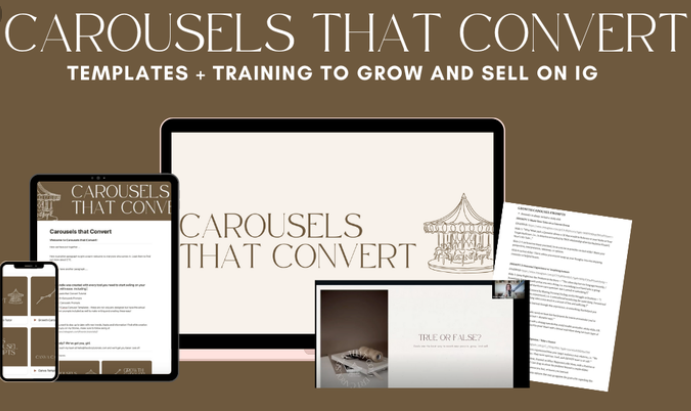
Jordan Dooley – Carousels that Convert
$119.00 Original price was: $119.00.$20.00Current price is: $20.00.
- 24/7 Contact Support & Telegram - Ecomkevin_1
- You Can Request Any Courses
- Original Courses HD Qualite and links updated
Guaranteed Safe Checkout


Description
Jordan Dooley – Carousels that Convert
Introduction
In the fast-paced digital world, capturing attention is no longer optional—it’s essential. Social media users scroll endlessly, making split-second decisions about what deserves their attention. This is where Jordan Dooley – Carousels that Convert becomes a powerful strategy for creators, entrepreneurs, and brands looking to stand out.
Carousel content has evolved from simple image slides into a sophisticated storytelling and conversion tool. When executed correctly, it can educate, engage, and ultimately drive action—whether that’s a follow, click, or purchase. This guide dives deep into how carousel strategies work, why they are effective, and how you can implement them to maximize results.
What Are Carousels and Why Do They Matter?
Carousels are multi-slide posts typically used on platforms like Instagram and LinkedIn. Instead of relying on a single image, they allow you to present a sequence of visuals that tell a story or deliver value step-by-step.
The power of carousels lies in:
- Extended engagement time – Users spend more time swiping through slides
- Higher algorithm preference – Platforms reward content that keeps users engaged
- Storytelling capability – Perfect for breaking down complex ideas
- Conversion potential – Structured slides guide users toward action
Unlike static posts, carousels create a journey. Each slide builds curiosity, encouraging the viewer to keep swiping.
The Core Philosophy Behind High-Converting Carousels
The concept behind Jordan Dooley – Carousels that Convert is not just about aesthetics—it’s about strategy. Every slide should serve a purpose, guiding the audience through a clear narrative.
1. Clarity Over Complexity
Your message must be simple and easy to understand. Overloading slides with text or visuals reduces effectiveness.
2. Value-Driven Content
Each carousel should provide actionable insights, tips, or solutions.
3. Intentional Design
Design is not just decoration—it supports communication.
4. Strategic Flow
The sequence of slides should feel natural and compelling.
Anatomy of a High-Converting Carousel
To truly master carousel content, you need to understand its structure. Each slide plays a specific role in the conversion process.
Slide 1: The Hook
This is the most important slide. It determines whether the user will engage or scroll past.
Best practices:
- Use bold headlines
- Create curiosity or urgency
- Address a pain point
Example:
“Why Your Content Isn’t Converting (And How to Fix It)”
Slides 2–4: Build Interest
These slides expand on the hook and keep the audience engaged.
- Introduce the problem
- Share relatable scenarios
- Highlight common mistakes
The goal is to make the reader feel understood.
Slides 5–7: Deliver Value
This is where you provide solutions.
- Share actionable tips
- Break down steps clearly
- Use concise text
Value is what earns trust—and trust leads to conversions.
Slides 8–9: Reinforce Message
Summarize key points and strengthen the takeaway.
- Highlight benefits
- Reiterate the transformation
Final Slide: Call-to-Action (CTA)
Every carousel should end with a clear CTA.
Examples:
- “Follow for more tips”
- “Save this post”
- “Visit the link in bio”
Without a CTA, even the best content can fail to convert.
Why Carousels Drive More Conversions
Carousels outperform single posts because they align with user behavior.
1. Interactive Experience
Users actively engage by swiping, increasing retention.
2. Micro-Content Delivery
Breaking information into slides makes it easier to digest.
3. Psychological Triggers
Curiosity and anticipation keep users moving forward.
4. Algorithm Boost
More engagement signals better content quality to platforms.
Content Ideas for High-Performing Carousels
If you want to succeed with Jordan Dooley – Carousels that Convert, you need strong content ideas. Here are some proven formats:
Educational Content
- “5 Tips to Improve Your Marketing Strategy”
- “Step-by-Step Guide to Building a Brand”
Mistake-Based Content
- “Common Mistakes Killing Your Growth”
- “What Not to Do in Social Media Marketing”
Transformation Content
- Before vs After results
- Case studies
Storytelling Content
- Personal experiences
- Business journeys
List-Based Content
- “Top Tools You Need in 2026”
- “10 Ways to Increase Engagement”
Design Principles That Enhance Conversions
Design plays a crucial role in carousel success. Even great content can fail if it’s poorly presented.
Keep It Minimal
Avoid clutter. Focus on one idea per slide.
Use Consistent Branding
Maintain colors, fonts, and style across slides.
Prioritize Readability
- Use large fonts
- Maintain contrast
- Avoid long paragraphs
Visual Hierarchy
Guide the viewer’s attention using size, color, and spacing.
Writing Copy That Converts
The effectiveness of your carousel depends heavily on your copy.
Use Conversational Language
Write like you’re speaking directly to your audience.
Focus on Benefits
Explain how your content helps the reader.
Create Curiosity
Leave small gaps that encourage swiping.
Be Concise
Short, impactful sentences work best.
Common Mistakes to Avoid
Even experienced creators make mistakes that reduce performance.
Overloading Slides
Too much text overwhelms users.
Weak Hooks
If the first slide isn’t compelling, the rest won’t matter.
Lack of Structure
Random slides confuse the audience.
No Call-to-Action
Without direction, users won’t take the next step.
Optimizing Carousels for SEO and Reach
While social media is different from traditional SEO, optimization still matters.
Use Keyword-Rich Captions
Include relevant keywords naturally in your caption.
Add Hashtags
Use a mix of popular and niche hashtags.
Write Engaging Descriptions
Encourage comments and shares.
Optimize Alt Text
Some platforms allow alt text—use it strategically.
Measuring Carousel Performance
To improve your strategy, track performance metrics.
Key Metrics to Monitor:
- Engagement rate
- Saves and shares
- Click-through rate
- Follower growth
Analyze what works and replicate successful patterns.
Advanced Strategies for Maximum Impact
Once you master the basics, you can implement advanced techniques.
Story Sequencing
Create multi-part carousel series to keep users coming back.
Content Repurposing
Turn blog posts into carousels.
Data-Driven Design
Use analytics to refine layout and messaging.
Emotional Triggers
Incorporate storytelling that resonates emotionally.
The Future of Carousel Content
Carousel content continues to evolve with changing algorithms and user behavior. As attention spans shrink, structured and engaging formats like carousels will become even more important.
Creators who focus on value, clarity, and strategy will consistently outperform others.
Conclusion
Mastering Jordan Dooley – Carousels that Convert is about more than just creating visually appealing slides. It’s about understanding your audience, delivering value, and guiding users toward meaningful action.
By focusing on strong hooks, structured storytelling, clear design, and strategic calls-to-action, you can transform your carousel content into a powerful conversion tool.
Whether you’re a beginner or an experienced marketer, implementing these principles will help you create content that not only captures attention but also drives real results.
Reviews
There are no reviews yet.