
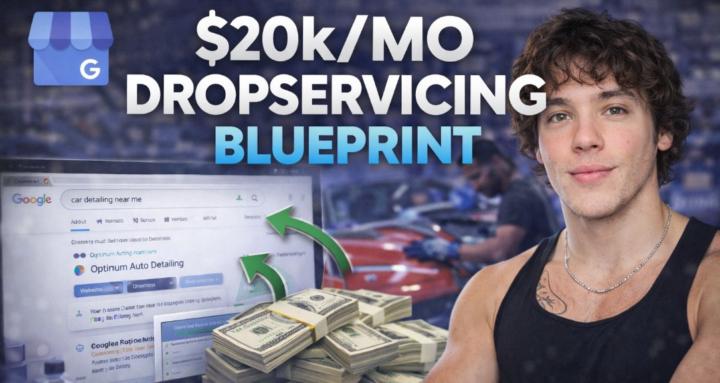
Eric Velch- 20k/mo Dropservicing Blueprint: The Complete Guide to Building a Scalable Online Service Empire
$49.00 Original price was: $49.00.$19.00Current price is: $19.00.
- 24/7 Contact Support & Telegram - Ecomkevin_1
- You Can Request Any Courses
- Original Courses HD Qualite and links updated
Guaranteed Safe Checkout


Description
In today’s digital economy, building a profitable online business no longer requires inventory, warehouses, or complex logistics. Instead, service-based models are dominating the market—and dropservicing stands at the top of that opportunity ladder.
Eric Velch- 20k/mo Dropservicing Blueprint is designed to show entrepreneurs how to create a high-income online service business without personally delivering the service themselves. This business model focuses on selling in-demand services to clients and outsourcing fulfillment to skilled freelancers or agencies—keeping the profit margin as the business owner.
This guide will break down the entire system, strategy, and structure behind this blueprint, so you can fully understand how the model works and why it has become one of the most powerful digital income strategies available today.
What Is Dropservicing?
Dropservicing is the service-based version of dropshipping.
Instead of:
-
Selling physical products
-
Managing inventory
-
Handling shipping
You:
-
Sell digital services
-
Outsource fulfillment
-
Keep the profit difference
For example:
You sell a website design package for $1,000.
>You hire a professional freelancer to complete it for $400.
>You keep $600 profit.
No technical skills required. No physical assets needed.
The key skill? Sales, positioning, and client acquisition.
Why Dropservicing Is So Powerful in 2026
The global service market continues to grow rapidly because:
-
Businesses need online marketing
-
Brands need content creation
-
Companies need automation
-
Local businesses need digital presence
At the same time, freelancers worldwide offer high-quality services at competitive prices. This creates a massive arbitrage opportunity.
Here’s why this model works:
1. Low Startup Cost
You don’t need inventory or production equipment. A website, outreach system, and freelancer network are enough.
2. High Profit Margins
Service margins are often 40–70% depending on niche and positioning.
3. Recurring Revenue
Many services (SEO, ads management, social media, automation) are monthly retainers.
4. Scalability
Once systems are built, you can manage multiple clients simultaneously.
Core Structure of the Blueprint
The system behind this model focuses on five foundational pillars:
1. Niche Selection
Success starts with choosing the right niche. Instead of targeting everyone, the strategy emphasizes:
-
High-ticket services
-
Businesses with strong cash flow
-
Industries actively spending on marketing
Examples:
-
Real estate agencies
-
E-commerce brands
-
Dentists and clinics
-
Coaches and consultants
Niche specificity allows higher pricing and easier positioning.
2. High-Ticket Offer Creation
Rather than selling cheap services, the model focuses on packaging services into premium solutions.
Instead of:
-
“I do logo design”
You sell:
-
“Complete Brand Identity Package with Conversion-Optimized Assets”
Instead of:
-
“Facebook ads management”
You sell:
-
“Customer Acquisition System for Local Businesses”
Perception = higher value = higher pricing.
3. Client Acquisition Systems
A major focus of the training is predictable client generation.
Methods include:
-
Cold email outreach
-
LinkedIn prospecting
-
Direct messaging
-
Strategic partnerships
-
Funnel-based lead generation
The idea is simple:
Build a repeatable system so leads consistently enter your pipeline.
Consistency beats randomness.
4. Outsourcing & Fulfillment
This is where operational efficiency matters.
Steps include:
-
Vetting freelancers
-
Creating SOPs (Standard Operating Procedures)
-
Setting quality control systems
-
Managing timelines and communication
The goal is to remove yourself from fulfillment and act as the project manager or CEO.
Eventually:
You manage people, not tasks.
5. Scaling to 20k/Month
Reaching 20k/month typically requires:
-
5–10 high-ticket clients
-
Retainer-based services
-
Clear systems and automation
Example scenario:
-
8 clients paying $2,500 per month
-
Average fulfillment cost: $1,200 per client
-
Gross profit per client: $1,300
-
Monthly gross profit: $10,400
As systems improve, margins increase.
Scale comes from:
-
Raising prices
-
Improving fulfillment efficiency
-
Building small internal teams
Skills Required for Success
The blueprint does not require coding or design expertise. However, it emphasizes developing:
Sales Communication
Understanding client pain points and positioning solutions.
Offer Framing
Presenting services as outcomes, not tasks.
Leadership
Managing freelancers effectively.
Time Management
Prioritizing revenue-generating activities.
Common Mistakes Beginners Make
Many beginners fail because they:
-
Choose oversaturated generic niches
-
Compete on price instead of value
-
Skip proper freelancer vetting
-
Lack consistent outreach
-
Fail to build systems early
The difference between struggling and scaling usually comes down to structure and execution.
Income Timeline Expectations
Dropservicing is not a get-rich-quick scheme.
Realistic expectations:
-
Month 1–2: Learning and testing
-
Month 3–4: First consistent clients
-
Month 5–6: Scaling systems
-
6–12 months: Potential to reach high four to low five figures
Speed depends on effort, consistency, and skill development.
Automation & Systems
Long-term sustainability requires:
-
CRM systems
-
Project management tools
-
Clear onboarding processes
-
Automated invoicing
-
KPI tracking
Once systems are documented, you can:
-
Hire project managers
-
Delegate sales
-
Build internal teams
At this stage, you move from operator to owner.
Profit Optimization Strategies
To maximize income:
1. Increase Pricing Gradually
As testimonials grow, raise rates.
2. Upsell Additional Services
Offer complementary solutions.
3. Improve Fulfillment Costs
Negotiate with freelancers or build in-house team.
4. Focus on Retention
Long-term clients create stability.
Retention is often more valuable than constant acquisition.
Who Should Consider This Model?
This blueprint is ideal for:
-
Beginners with limited capital
-
Freelancers wanting to scale
-
Agency owners seeking structure
-
Entrepreneurs who prefer sales over technical work
-
Students looking for flexible income
It is not ideal for:
-
Those avoiding communication
-
People expecting instant results
-
Individuals unwilling to build systems
Long-Term Vision
Dropservicing can evolve into:
-
Full-scale marketing agencies
-
Consulting firms
-
SaaS partnerships
-
White-label service providers
Many successful agencies start as simple arbitrage models and evolve into branded service companies.
The first step is mastering client acquisition and delegation.
Final Thoughts
Eric Velch- 20k/mo Dropservicing Blueprint outlines a structured path toward building a scalable service-based business. The model leverages:
-
High-ticket positioning
-
Strategic outsourcing
-
Consistent client acquisition
-
Process-driven operations
When executed properly, this approach can create recurring income without requiring technical expertise.
The key is discipline, systemization, and consistent outreach.
Success does not come from watching content.
It comes from implementation.
If you treat this as a real business—build systems, focus on value, and commit to improvement—dropservicing can become a powerful vehicle for financial independence.
Reviews
There are no reviews yet.