
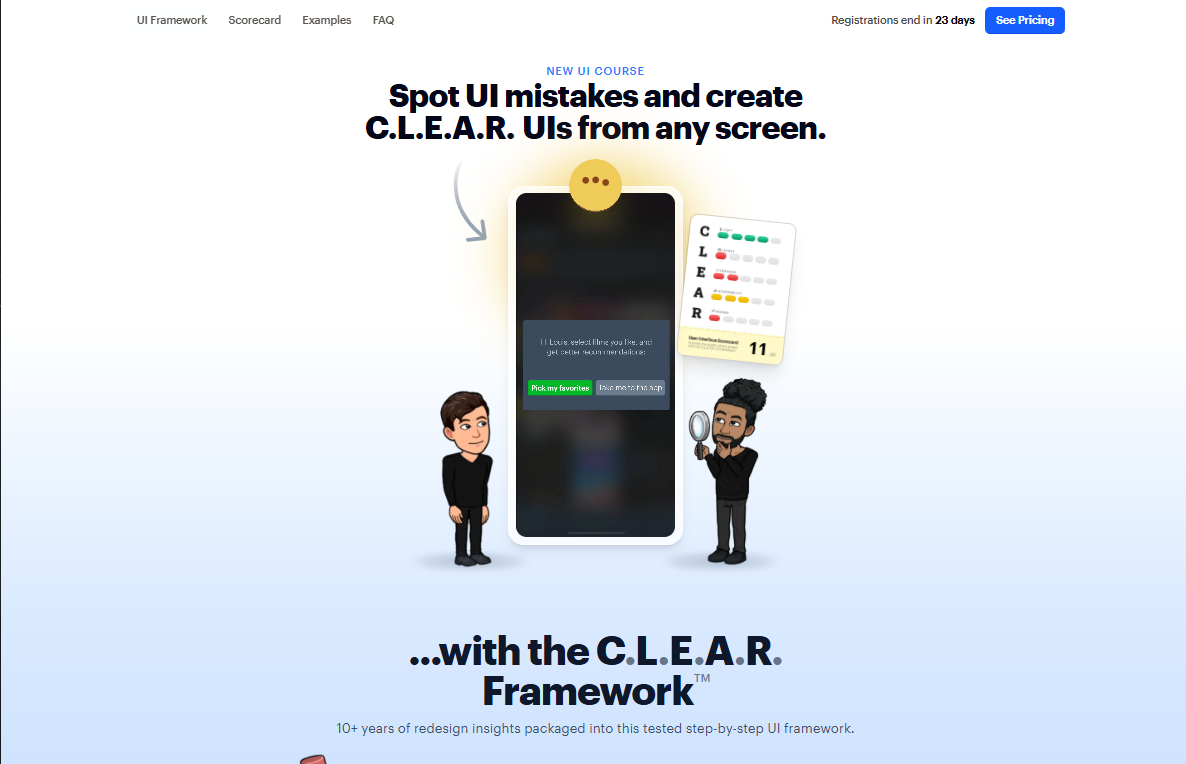
Growth.Design – The psychology of UI design
$800.00 Original price was: $800.00.$45.00Current price is: $45.00.
- 24/7 Contact Support & Telegram - Ecomkevin_1
- You Can Request Any Courses
- Original Courses HD Qualite and links updated
Guaranteed Safe Checkout


Description
Growth.Design – The Psychology of UI Design: Complete Guide to Designing User Experiences That Convert
In today’s digital world, creating a beautiful interface is no longer enough. Successful digital products are built by understanding how people think, behave, make decisions, and interact with technology. Growth.Design – The Psychology of UI Design is one of the most respected educational resources for designers, product managers, marketers, entrepreneurs, and developers who want to create products that users genuinely enjoy using.
Rather than teaching design based only on colors, typography, or layouts, this comprehensive learning resource focuses on the science behind user behavior. It combines psychology, behavioral economics, cognitive science, usability research, and real-world case studies to explain why certain interfaces perform better than others.
Whether you’re building SaaS products, mobile applications, websites, eCommerce stores, or digital platforms, understanding user psychology allows you to create experiences that increase engagement, improve conversions, reduce friction, and build long-term customer loyalty.
What Is Growth.Design?
Growth.Design is a globally recognized platform that teaches product design through interactive case studies and visual storytelling. Instead of relying on lengthy theoretical lessons, it explains complex UX concepts using engaging examples inspired by successful digital products.
Every lesson demonstrates how psychological principles influence user decisions and how companies use these techniques to improve customer experiences ethically.
The course emphasizes practical learning that professionals can immediately apply to real projects.
Why User Psychology Matters in UI Design
Every interaction a user has with an interface involves decision-making.
Questions users unconsciously ask include:
- Can I trust this website?
- Is this product worth buying?
- Where should I click next?
- Will this action take too much effort?
- Is this information easy to understand?
Good interfaces answer these questions naturally without confusing the user.
By understanding human psychology, designers can create interfaces that feel intuitive, reduce cognitive effort, and guide users toward completing desired actions.
What You’ll Learn
The curriculum covers numerous aspects of behavioral design, including:
Cognitive Biases
Learn how mental shortcuts influence user decisions, purchasing behavior, and navigation patterns.
Topics include:
- Anchoring
- Confirmation bias
- Framing effect
- Loss aversion
- Availability heuristic
- Social proof
- Scarcity
- Reciprocity
Understanding these concepts helps designers predict user behavior more accurately.
User Decision Making
Successful interfaces reduce unnecessary thinking.
You’ll understand:
- Decision fatigue
- Choice overload
- Mental models
- Habit formation
- Attention management
- Information processing
These concepts help simplify complex user journeys.
Behavioral Economics
The course explains how economic psychology influences digital products.
You’ll explore:
- Value perception
- Pricing psychology
- Trust signals
- Urgency
- Commitment consistency
- Default choices
- Reward systems
These lessons are useful for SaaS platforms, subscription businesses, and eCommerce websites.
UX Research
Effective design begins with understanding users.
Important research methods include:
- User interviews
- Behavioral observation
- Journey mapping
- Persona development
- Customer feedback analysis
- A/B testing
- Usability testing
Research ensures design decisions are based on evidence rather than assumptions.
Interface Design Principles
Great interfaces follow predictable patterns that users already understand.
Key principles include:
Visual Hierarchy
Guide user attention using:
- Size
- Contrast
- White space
- Typography
- Color
- Positioning
Strong visual hierarchy makes important actions immediately visible.
Cognitive Load Reduction
Too much information overwhelms users.
The course teaches techniques such as:
- Progressive disclosure
- Content prioritization
- Minimal interfaces
- Chunking information
- Simplified navigation
Reducing cognitive load improves satisfaction and completion rates.
Feedback Systems
Users need immediate confirmation after every interaction.
Examples include:
- Loading animations
- Success messages
- Error notifications
- Hover effects
- Progress indicators
Effective feedback increases confidence and usability.
Emotional Design
People remember how products make them feel.
Learn how to create:
- Delightful onboarding
- Positive first impressions
- Friendly microcopy
- Human-centered interactions
- Engaging animations
- Emotional connections
Emotional experiences increase product retention.
Practical Case Studies
One of the biggest strengths of Growth.Design is its visual case study approach.
Lessons often analyze products similar to:
- Streaming platforms
- Productivity software
- Social media applications
- Online marketplaces
- Booking websites
- Food delivery apps
- Mobile banking
- Subscription services
Instead of abstract theory, students see exactly how successful interfaces influence behavior.
Who Should Take This Course?
This learning resource is valuable for:
UX Designers
Improve usability while designing user-centered interfaces.
UI Designers
Create interfaces that look attractive while increasing engagement.
Product Designers
Design complete customer experiences supported by behavioral science.
Product Managers
Understand how design decisions impact user retention and business growth.
Entrepreneurs
Build products customers enjoy using.
Developers
Create interfaces that feel intuitive rather than simply functional.
Marketing Professionals
Improve landing pages, lead generation, and customer conversion.
CRO Specialists
Increase conversion rates using psychological optimization techniques.
Skills You’ll Develop
After completing the program, learners can confidently:
- Design intuitive interfaces
- Improve customer experiences
- Increase user engagement
- Optimize conversion funnels
- Reduce friction
- Build trust through design
- Create persuasive interfaces ethically
- Improve onboarding experiences
- Design effective call-to-action sections
- Enhance customer retention
Real-World Applications
The knowledge gained applies across many industries.
Examples include:
- SaaS products
- Mobile applications
- eCommerce stores
- Educational platforms
- Healthcare applications
- Banking software
- AI products
- Productivity tools
- Enterprise software
- Membership websites
Every digital product benefits from improved user experience.
Ethical Persuasive Design
The course strongly emphasizes ethical persuasion rather than manipulation.
Students learn to:
- Build trust
- Improve clarity
- Reduce confusion
- Help users make informed decisions
- Create transparent interfaces
- Respect user autonomy
Ethical design creates long-term customer relationships instead of short-term gains.
Benefits of Learning Behavioral Design
Professionals who understand psychology often produce interfaces that outperform competitors because they:
- Increase customer satisfaction
- Improve conversion rates
- Reduce abandonment
- Enhance usability
- Encourage repeat usage
- Strengthen customer loyalty
- Lower support requests
- Improve accessibility
Behavioral insights become a competitive advantage in modern product development.
Why Professionals Recommend Growth.Design
The platform has earned a strong reputation because it:
- Uses engaging visual storytelling
- Explains difficult concepts simply
- Focuses on practical implementation
- Includes real-world examples
- Covers modern UX principles
- Encourages evidence-based decision making
- Teaches timeless psychological concepts
The lessons remain valuable regardless of changing design trends.
Career Opportunities
Professionals with expertise in behavioral UX are increasingly sought after for positions such as:
- UX Designer
- UI Designer
- Product Designer
- Product Manager
- UX Researcher
- CRO Specialist
- Interaction Designer
- Digital Experience Consultant
- Design Strategist
- Customer Experience Manager
As businesses invest more in user-centered design, demand for these skills continues to grow.
Final Thoughts
Understanding human psychology is one of the most valuable skills in modern digital product development. Rather than relying solely on aesthetics, successful interfaces combine usability, behavioral science, accessibility, and thoughtful interaction design to create experiences users genuinely appreciate.
Growth.Design – The Psychology of UI Design provides an engaging and practical way to master these concepts through real-world examples, interactive lessons, and research-backed design principles. Whether you’re launching a startup, improving an existing product, or advancing your career in UX, the knowledge gained from this learning resource can help you build intuitive, trustworthy, and high-performing digital experiences that deliver lasting value to both users and businesses.
Reviews
There are no reviews yet.